Gemini 3 Pro: The Agentic Leap with Deep Think & Vibe Coding
Google officially launched Gemini 3 on November 18, 2025. For some on social platforms like X.com, the launch was almost like the second coming. I have not seen such excitement over the release of a new LLM version before. To give credit to Gemini Pro 3, I would say it is the best LLM at the moment, so maybe the hype was warranted.
What is Gemini 3 Pro
Google is positioning Gemini 3 not just as a chatbot, but as an agentic reasoning engine. The core narrative is that this model doesn’t just “chat”—it plans, codes, and executes multi-step workflows with a level of autonomy we haven’t seen before
1. The Core Upgrade: “Deep Think” & Reasoning
While the overall update is very powerful, the novelty with Gemini 3 is the new Deep Think mode. The new model introduces a form of advanced deliberative reasoning. Think of it as AI “System 2” thinking, where it can pause, explore multiple reasoning paths, cross-check its own logic, and refine its conclusions before answering. This shift isn’t just theoretical: it reportedly reaches an impressive 1501 Elo on the LM Arena leaderboard, widening the gap with previous frontier models like Gemini 2.5 and other competitors. In practice, this kind of deep reasoning unlocks far more reliable performance in nuanced, high-stakes tasks such as legal contract analysis, scientific research, and complex mathematics—domains where hallucinations historically created major limitations.
2. For Developers: “Vibe Coding” & Google Antigravity
Google’s latest release leans aggressively into the developer ecosystem, introducing concepts like “Vibe Coding”, where you generate code from natural language intent rather than strict syntax, effectively programming through high-level “vibes.”
Alongside it comes Google Antigravity, a new agentic development platform that lets AI agents operate autonomously across your editor, terminal, and browser turning you into the architect while Gemini 3 functions as the entire engineering team.
The update also includes a powerful Gemini CLI, allowing natural-language commands to directly drive shell operations directly (ask it “Find the commit where I broke dark mode,” and it will run a full git bisect for you). On the API side, the model now supports a 1-million-token context window with faster retrieval, plus new parameters like thinking_level (Low/High) to balance latency with deeper reasoning, and media_resolution to fine-tune token usage when working with images or video.
To help you get this article up on your blog while the news is fresh (released yesterday, Nov 18, 2025), here is a detailed breakdown of Gemini 3.
Since this is for a tech blog, I have structured this to highlight the “breaking” aspects (Benchmarks, Developer Tools) alongside the broader implications (Reasoning, UX).
Headline Angle: The “Agentic” Era Begins
Google is positioning Gemini 3 not just as a chatbot, but as an agentic reasoning engine.1 The core narrative is that this model doesn’t just “chat”—it plans, codes, and executes multi-step workflows with a level of autonomy we haven’t seen before.2
1. The Core Upgrade: “Deep Think” & Reasoning3
The standout feature is the new Deep Think mode.4
- What it is: Similar to “System 2” thinking, this allows the model to “ponder” complex queries before responding.5 It can explore multiple reasoning paths, error-check its own logic, and refine its answer.
- The Stat: It reportedly scores 1501 Elo on the LM Arena leaderboard, significantly widening the gap with previous frontier models (like Gemini 2.5 and competitors).6
- Use Case: It excels at nuanced tasks like legal contract analysis, scientific research, and complex math where “hallucination” was previously a major blocker.7
2. For Developers: “Vibe Coding” & Google Antigravity8
This release is heavily targeted at the dev community, introducing terms like “Vibe Coding” (writing code via natural language “vibes” or high-level intent rather than syntax).9
- Google Antigravity: This is a new agentic development platform.10 It allows developers to build software where AI agents work autonomously across your editor, terminal, and browser.11 You act as the architect; Gemini 3 acts as the engineering team.
- Gemini CLI: A new command-line tool where you can pipe natural language directly into shell commands (e.g., “Find the commit where I broke the dark mode theme” 12$\rightarrow$ executes
git bisectautomatically).13 - API Specs:
- Context Window: 1 Million tokens (industry standard for Google now, but with faster retrieval).14
- New Parameters: Developers can now use
thinking_level(Low/High) to control latency vs. reasoning depth, andmedia_resolutionto fine-tune token usage for images/video.15
3. The “Generative Interface” Shift
Gemini 3 also debuts Dynamic Views, a significant shift in how AI delivers information. Instead of responding with plain text, the model can generate custom UI elements on the fly—building interfaces that adapt to your intent in real time. Ask for a travel itinerary, and you don’t just get a list; you get an interactive card layout complete with maps, dates, and booking modules. This marks a significant evolution away from static “chat bubbles” toward AI systems that dynamically construct their own interfaces, tailoring the presentation to the task rather than forcing everything through text.
4. Multimodal Dominance
Google is doubling down on its native multimodal architecture with Gemini 3, allowing the model to seamlessly ingest video (up to an hour), audio, images, and PDFs in a single workflow. This multimodal depth translates into real performance gains: Gemini 3 scores 93.8% on GPQA Diamond, a notoriously difficult graduate-level science benchmark, and shows dramatic improvement in “vision-to-code” tasks, such as sketching a website on a napkin and having the model instantly generate a fully functional live site. It’s a significant leap that turns previously clunky, multi-step workflows into a single, fluid multimodal input stream.
5. Availability & Pricing
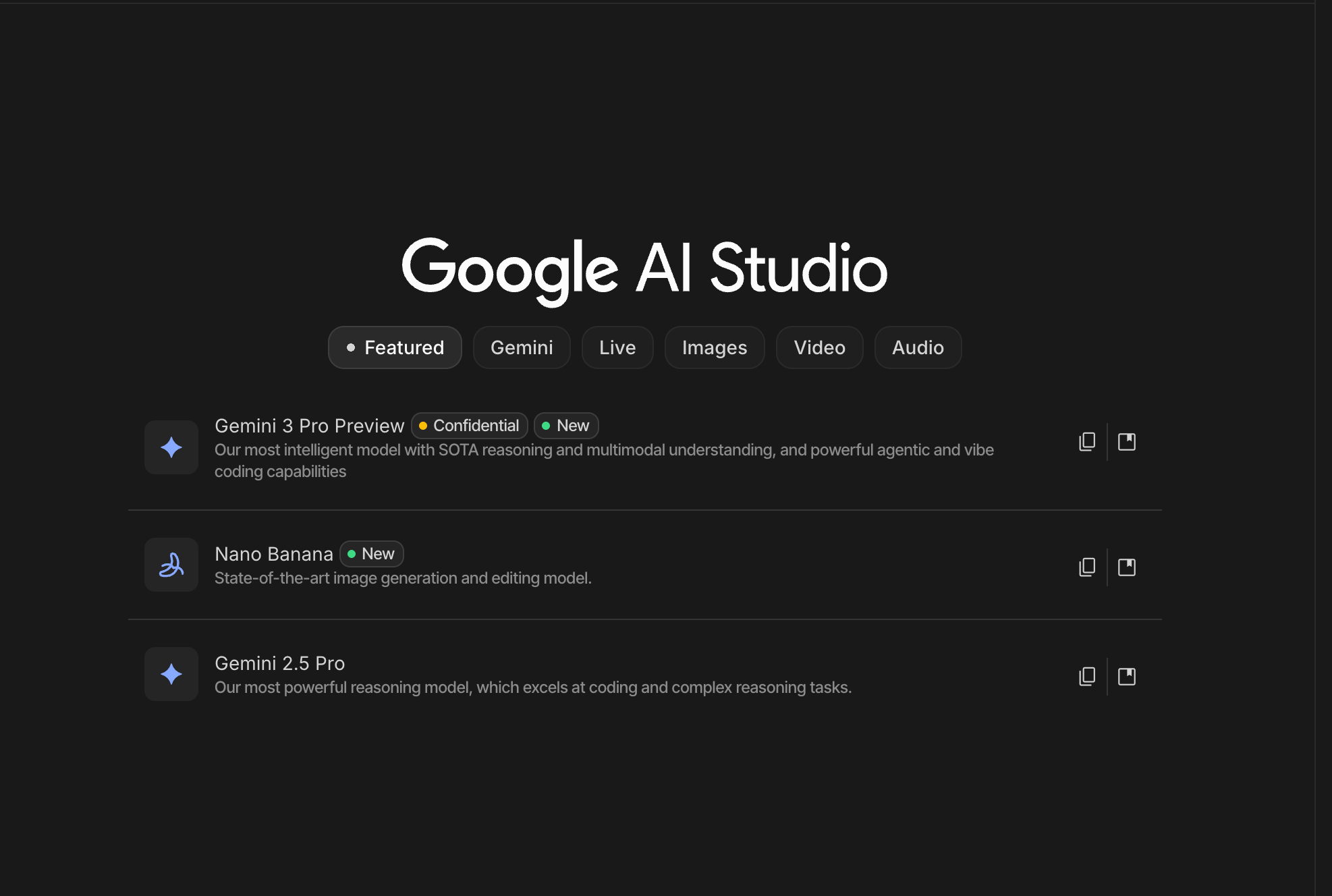
Gemini 3 officially launched on November 18, 2025, and is already rolling out across Google AI Studio, Vertex AI, and the Gemini App for Advanced and Ultra subscribers. On the business side, Google is keeping pricing aggressively competitive, with API costs starting around $2.00 per 1M input tokens for prompts under 200k, positioning it in the same price tier as “Flash”-style lightweight models, despite delivering performance that’s firmly “Pro”-level. It’s a strategic move that makes high-end reasoning accessible without the usual enterprise-grade price tag.
Conclusion
In the coming days, we’ll set out to test a lot of the tools that come with the new upgrade and look forward to Nano Banana 2 (or is it Nano Banana Pro?) as well as upgrades to VEO 3.1. There will be a section full of image and video prompts to test out the new limits of these popular media generation tools.