AEO vs SEO: What’s the Difference?
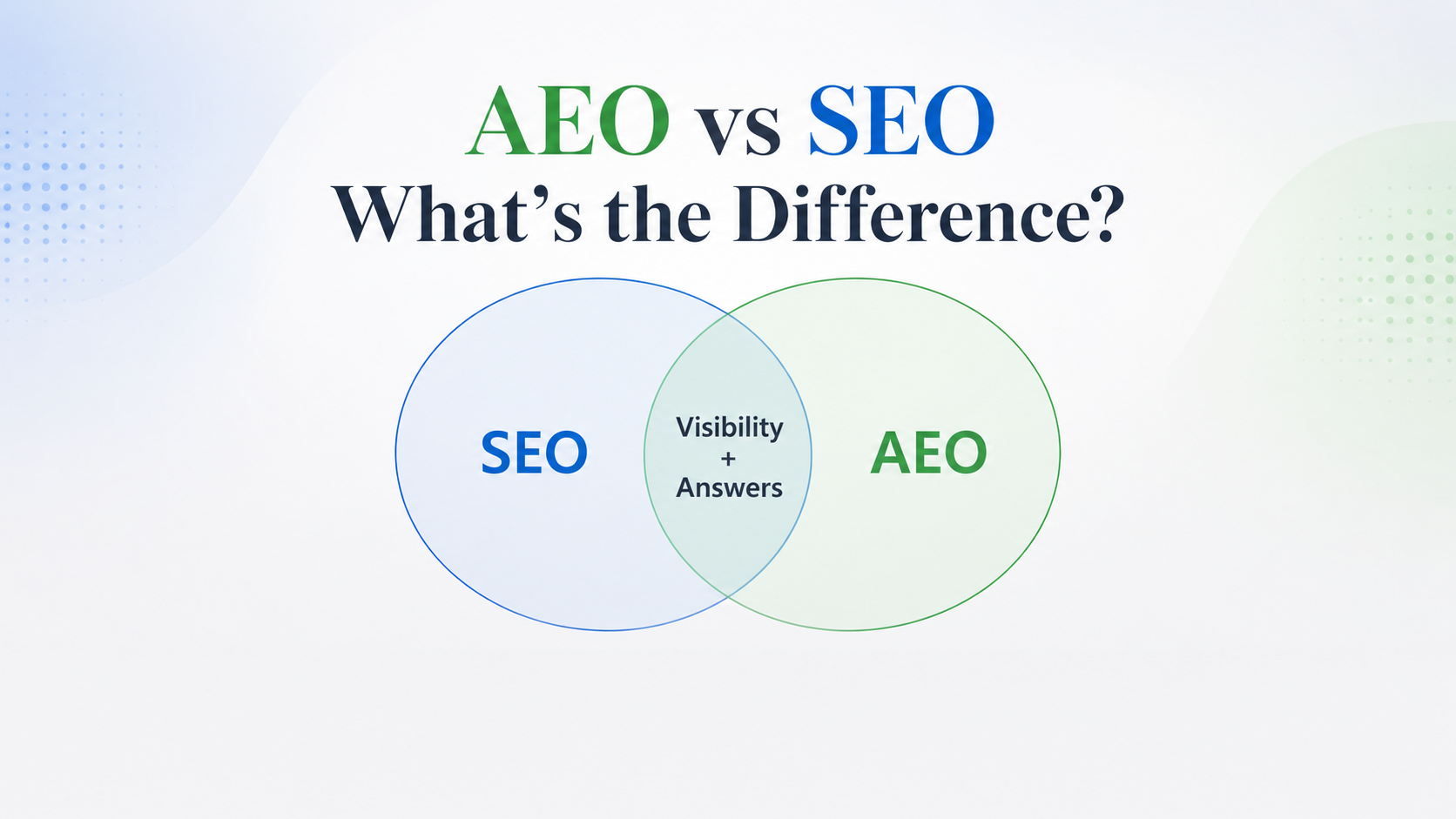
SEO helps your pages get discovered and ranked in search results. AEO helps your content get selected as the direct answer to a user’s question.
They are not enemies (a surprise to most people). AEO does not replace SEO. Instead, AEO builds on SEO by making your content easier for search engines, AI systems, featured snippets, voice assistants, and answer engines to understand and use.
For a while now the general consensus has been that SEO is dead, but that might exaggerate the current state of things a bit. Traditional SEO is not dead, but is not the norm anymore. To be fair, traditional SEO was on it’s way out way before the acceptance of LLMs, Generative answers, AI search engines, etc.
Here is the simplest way to think about it:
SEO is about visibility. AEO is about answerability.
A page can rank well because it has strong SEO. But if the content is vague, poorly structured, or slow to answer the question, it may not perform well in answer-driven search experiences. So your site might rank well in a traditional (are we referencing Google as a traditional platform?) sense in a search engine but that might not be enough to be cited in AI overviews or other LLM-based results.
That matters because search is no longer only about ten blue links. Google features direct answers through featured snippets and AI Overviews. ChatGPT Search, Perplexity, Gemini, and other AI tools can also give users summarized responses with links or citations. Google says featured snippets come from websites it finds and are selected based on how well they answer a user’s question and how helpful they are.
So the real question is not only:
Can this page rank?
It is also:
Can this page answer?
The days of long, drawn-out paragraphs to keep you reading before finding the answer to your questions are gone for the time being. You can still write a 5,000-word article on why Rabbits have fluffy hair, but it probably won’t get cited if you can’t answer the question in the first few sentences.
What Is SEO?
SEO stands for Search Engine Optimization. It is the practice of improving a website so search engines can crawl, understand, index, rank, and display its pages for relevant searches.
Traditional SEO includes things like:
- keyword research
- technical SEO
- content quality
- internal linking
- backlinks
- page speed
- mobile usability
- title tags and meta descriptions
- site architecture
- user experience
SEO is still the foundation of online visibility. Your page still needs SEO to have any chance of being found on the internet.
If your page cannot be crawled, loads slowly, has weak content, or lacks authority, it will struggle in both traditional search and AI-assisted search.
Google’s own guidance describes SEO as a helpful activity when it is applied to people-first content, and Google recommends creating helpful, reliable content made primarily to benefit people rather than content made mainly to gain rankings.
So you still need to make good content that people will appreciate and stick around to engage with. Remember that the new word for the next few years is “engagement”. If Google notices users engaging with your content, it is a good sign. This will (most likely) transfer to being cited in LLM search properties.
That point is important: good SEO is not just keyword placement. It is about making your website easier to discover, understand, trust, and use.
What Is AEO?
AEO stands for Answer Engine Optimization. It is the practice of structuring content so it can answer specific user questions clearly and directly.
AEO is especially useful for search experiences where the user expects a fast answer, such as:
- featured snippets
- People Also Ask results
- voice search
- AI Overviews
- ChatGPT Search
- Perplexity answers
- AI-generated summaries
- knowledge-style responses
AEO is not about stuffing pages with question keywords. It is about making the answer obvious.
For example, if someone searches:
What is AEO?
A weak article might begin with:
In the digital age, marketing continues to evolve as businesses adapt to new technologies and user behavior.
That sounds polished, but it delays the answer. It is a drawn-out sentence to try to keep the reader from finding the answer too quickly.
A stronger AEO-style opening would be:
AEO, or Answer Engine Optimization, is the process of structuring content so search engines and AI tools can use it to answer user questions directly.
That is better because it respects the reader’s intent.
The user asked a question. The page answered. If you want to add more information, you can still do that, just do it after you’ve answered the user’s query.
AEO vs SEO: The Main Difference
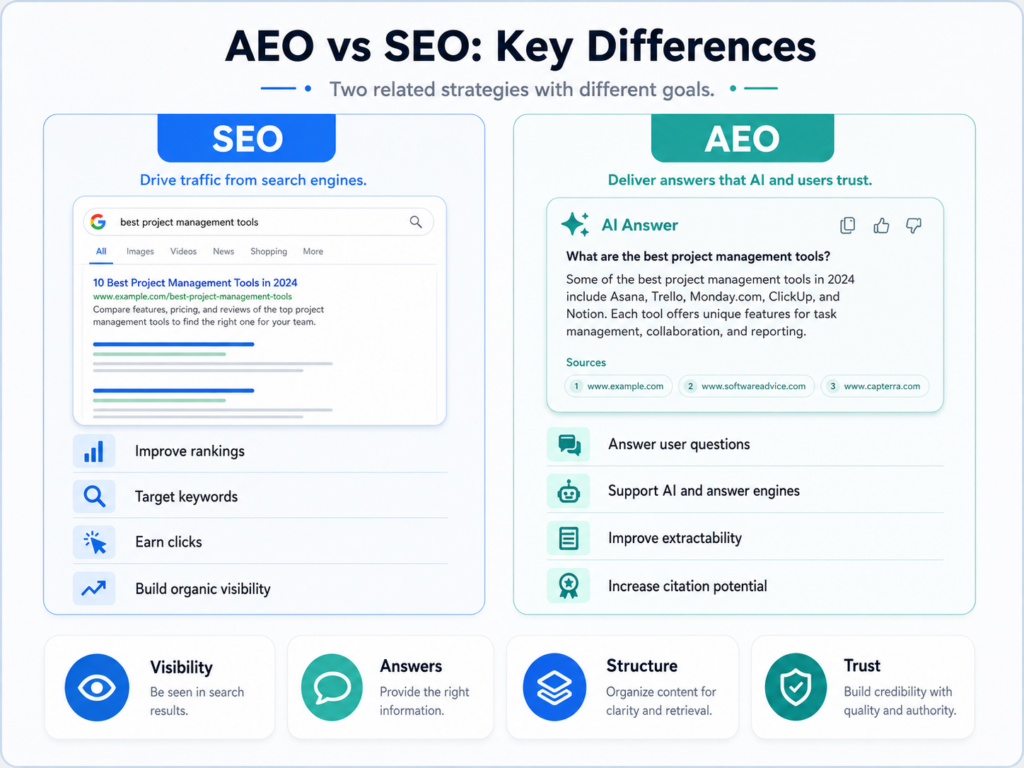
The biggest difference between AEO and SEO is the outcome they optimize for.
SEO tries to help a page appear in search results.
AEO tries to help a piece of content become the answer inside a search or AI experience.
Here is a practical comparison of the two:
| Category | SEO | AEO |
|---|---|---|
| Main goal | Improve rankings and organic visibility | Provide direct, extractable answers |
| Primary unit | The page | The answer or answer block |
| Search behavior | Users search, scan, click | Users ask, read, refine, compare |
| Common formats | Blog posts, landing pages, category pages | FAQs, definitions, tables, snippets, summaries |
| Success signal | Rankings, impressions, clicks, conversions | Snippet inclusion, answer visibility, citations, assisted discovery |
| Content style | Comprehensive and keyword-informed | Clear, concise, structured, question-led |
| Best use | Building search traffic over time | Capturing direct-answer and AI search opportunities |
A simple way to explain it:
SEO gets your page into the conversation. AEO makes your content useful once the question is asked.
It is difficult to focus on one and not have a good outcome in the other. As long as you are providing good content with smart answer structures, then AEO is just an extra step.
A Real Example: SEO Content vs AEO Content
Let’s say you are writing about Google AI Overviews.
An SEO-focused section might say:
Google AI Overviews are becoming an important part of modern SEO. Businesses should understand how these AI-powered search results may affect organic traffic and visibility.
That is fine, but it is general. There is nothing inherently wrong with the answer to that question. However, there is a better version for search intent.
An AEO-focused version would say:
Google AI Overviews are AI-generated summaries that appear in some Google Search results. To optimize for them, create helpful, well-structured content that answers user questions clearly and gives Google useful source material to reference.
It’s not necessarily a shorter answer, but it is more direct. The second version is stronger for AEO because it does three things quickly:
- Defines the topic
- Explains why it matters
- Gives a practical direction
It is easier for a reader to understand and easier for an answer system to summarize.
Why AEO Matters More Now
AEO has existed in some form for years. Featured snippets, voice search, and answer boxes all pushed marketers to think beyond rankings. This also includes FAQs, how-tos, and any other type of content that would benefit from schema markup.
But AI search has made AEO more important.
Search experiences are becoming more conversational. Users are asking longer, more specific questions. Instead of typing:
SEO tools
They might ask:
What SEO tools should a small business use if they want to improve visibility in Google and AI search?
That type of query needs more than a keyword-matched page. It needs a useful answer.
Google’s featured snippet documentation says featured snippets are special boxes where the normal search result format is reversed, with the descriptive snippet shown first. This is a useful reminder: search engines have been moving toward answer-first formats for a long time.
AI search accelerates that shift.
The future of search is not just about pages being found. It is about information being interpreted, summarized, cited, and trusted.
Is AEO Replacing SEO?
No. AEO is not replacing SEO.
AEO without SEO is weak because answer engines still need accessible, trustworthy, well-organized content to work with.
In turn, SEO without AEO is incomplete because a page may rank but fail to answer clearly enough for modern search experiences.
The better model is:
SEO is the foundation. AEO is the answer layer.
Think of it like building a house.
SEO is the structure: the foundation, wiring, walls, and access points.
AEO is the room layout: making sure people can quickly find what they came for.
You need both if you want your online business to thrive now.
How SEO and AEO Work Together
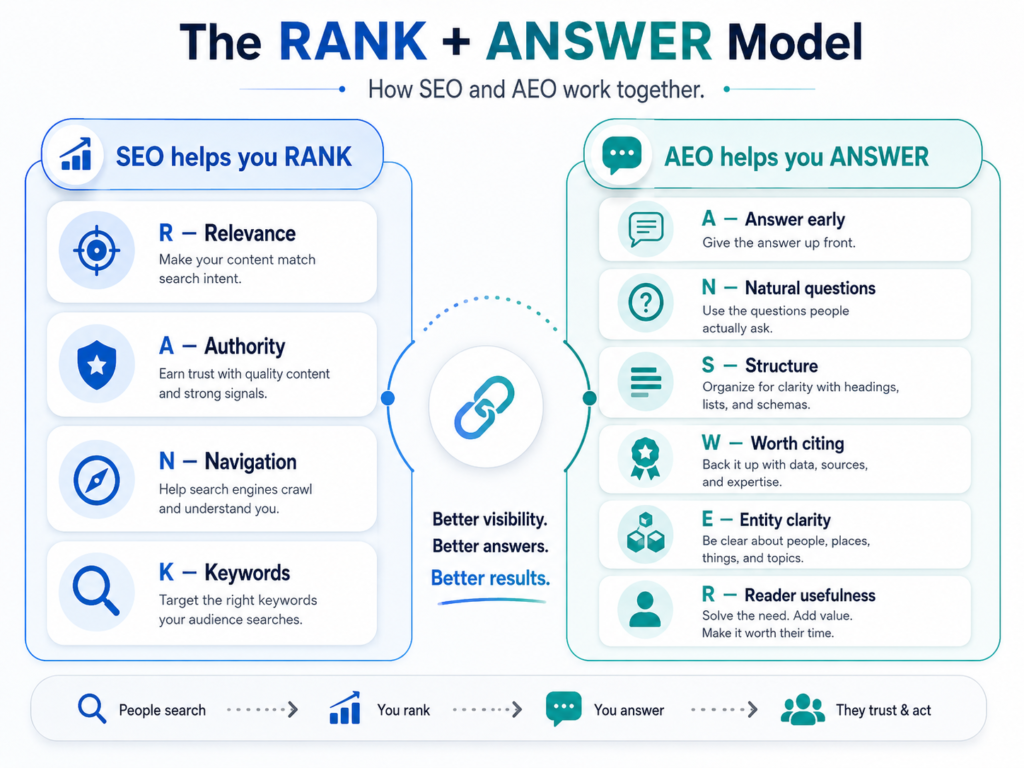
SEO and AEO work best when they support each other.
For example, a strong article should:
- target a real search demand
- be crawlable and indexable
- have a clear title
- answer the main question early
- use logical headings
- provide depth and examples
- include internal links
- cite credible sources when needed
- add FAQs
- use tables or lists when helpful
- satisfy the user’s intent
SEO helps the page earn visibility.
AEO helps the page deliver a usable answer.
This is especially important for topics where users want clarity quickly, such as:
- definitions
- comparisons
- how-to guides
- product recommendations
- pricing questions
- travel planning
- medical explanations
- legal basics
- software choices
- local service decisions
For every niche, nearly every article should be written with both SEO and AEO in mind.
AEO vs SEO in the AI Search Era
AI search changes the balance. While there might be sites that are perpetually in the #1 Google search ranking, their content might not be great to AEO. It’s similar to how a few years ago, you could snipe top search results via featured snippets on Google, even though you were not ranking in the top five spots. With AEO, this is possible in AI-based results at a broader scale.
Traditional SEO asks:
- What keyword are we targeting?
- Can this page rank?
- How strong are the competing pages?
- What links does this page need?
- What search intent does the page satisfy?
AEO adds a second layer of questions:
- What exact question is the user asking?
- Is the answer clear in the first few lines?
- Can the content be summarized accurately?
- Are the headings useful?
- Is the source trustworthy?
- Does the page include examples or original insight?
- Would an AI system have a reason to cite this page?
The best content strategy now includes both sets of questions.
That is why the best AI search content does not feel like old SEO copy. It feels like a useful resource written by someone who understands the topic. The key-phrase there is “useful resource,” which replaces the idea of “a good article.”
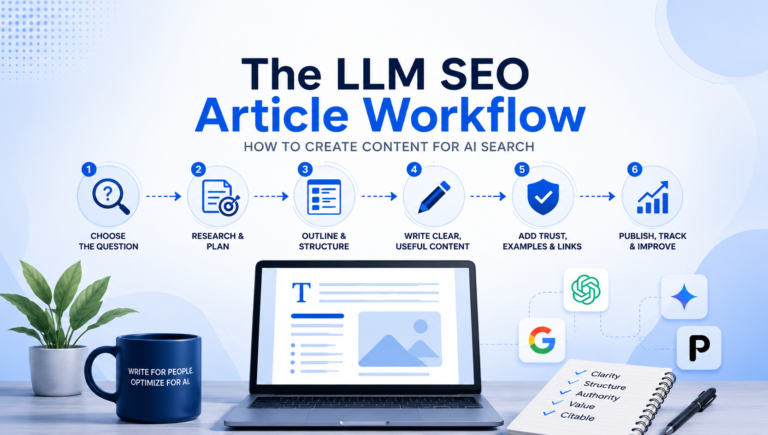
How to Optimize for SEO and AEO Together
1. Start with search intent, not just keywords
A keyword tells you what the user typed. Intent tells you what they need.
For example, the keyword “AEO vs SEO” suggests the reader wants:
- a clear definition of both terms
- a side-by-side comparison
- examples
- whether one replaces the other
- practical next steps
If your article only defines the acronyms, it is too thin.
2. Put the answer before the essay
For question-based content, answer first.
Then explain. Make your information section after you’ve already answered the questions. Making sure you follow this route is the easiest way to get your content cited.
This does not mean every article needs to be short. It means the article should respect the reader’s time.
Good structure:
- Direct answer
- Simple explanation
- Examples
- Deeper context
- Practical steps
- FAQ
Bad structure:
- Long generic intro
- History lesson
- Vague benefits
- Eventually, the answer
I always like to use the example of recipe websites. For a long time, users would search on Google for a recipe. Click on a search result and then be forced to read through the history of the dish, then how delicious it can be when prepared correctly, the macro breakdown, and then at the bottom, the actual recipe. Remember, DON’T BE A RECIPE WEBSITE!
3. Use headings that match real questions
Weak headings:
- Introduction
- Overview
- More Information
- Final Thoughts
Better headings:
- What Is SEO?
- What Is AEO?
- Is AEO Replacing SEO?
- How Do SEO and AEO Work Together?
- How Do You Optimize for Both?
Headings should help the reader navigate the article without effort.
4. Add answer blocks
An answer block is a short, self-contained explanation that can stand on its own.
Example:
AEO is different from SEO because it focuses on direct answers rather than only rankings. SEO helps a page appear in search results, while AEO helps content become clear enough to be used in snippets, AI summaries, voice responses, and answer engines.
That type of block is useful for readers and AI systems.
5. Use tables for comparisons
For comparison topics, tables are not optional. They make the answer easier to understand.
AEO vs SEO is exactly the kind of topic where a table improves the article.
Use tables for:
- definitions
- pros and cons
- strategy differences
- examples
- checklists
- platform comparisons
6. Write FAQs that solve real doubts
Do not add generic FAQs just to fill space.
Use FAQs to answer the questions readers are likely to ask next:
- Is AEO better than SEO?
- Does AEO help with ChatGPT?
- Does AEO help with Google AI Overviews?
- Do I still need backlinks?
- Can small websites use AEO?
- What is the first thing I should change?
Good FAQs can capture long-tail searches and support AI answer visibility.
7. Show credibility
Credibility matters more as AI-generated answers become more common.
Add trust signals such as:
- author bio
- updated date
- examples
- original frameworks
- credible sources
- screenshots where relevant
- clear editorial standards
- internal links to related guides
Google’s helpful content guidance recommends evaluating content around who created it, how it was created, and why it was created. That is a useful standard for AI-era content too.
NeuronPulse Framework: The RANK + ANSWER Model
A simple way to understand the relationship between SEO and AEO is this:
SEO helps you RANK
R — Relevance: Match the topic and intent.
A — Authority: Build trust through links, expertise, and reputation.
N — Navigation: Make the site easy to crawl and use.
K — Keywords: Use the language your audience searches for.
AEO helps you ANSWER
A — Answer early: Give the direct answer near the top.
N — Natural questions: Use headings and FAQs that match how people ask.
S — Structure: Use lists, tables, summaries, and short sections.
W — Worth citing: Add examples, sources, and original insight.
E — Entity clarity: Make the topic, brand, and context obvious.
R — Reader usefulness: Make the content genuinely helpful, not just optimized.
The goal is not to choose between ranking and answering.
The goal is to create content that can do both.
Example: Turning SEO Content Into AEO Content
Here is a simple before-and-after example.
SEO-only version
Our company offers digital marketing services for businesses that want to improve their online presence. We use advanced strategies to help brands grow and reach more customers online.
This is generic. It does not answer a specific question.
SEO + AEO version
Digital marketing services help businesses attract customers online through channels such as SEO, paid ads, content marketing, email, and social media. For small businesses, the best digital marketing strategy usually starts with a clear offer, a conversion-focused website, local SEO, and one or two consistent traffic channels.
This version is stronger because it gives the reader a useful explanation immediately.
It is also more likely to work in answer-driven search because it contains a complete, clear answer.
When Should You Focus More on SEO?
SEO should be the priority when your goal is to build long-term organic visibility around topics, products, services, and commercial searches.
Focus heavily on SEO for:
- service pages
- product pages
- category pages
- local landing pages
- buyer-intent articles
- comparison pages
- evergreen guides
- high-volume informational keywords
SEO is especially important when competition is high and authority matters.
When Should You Focus More on AEO?
AEO should be the priority when the user is asking a specific question and expects a fast, clear answer.
Focus heavily on AEO for:
- definition articles
- FAQ pages
- how-to guides
- comparison content
- troubleshooting content
- voice-search queries
- AI search topics
- featured snippet opportunities
- “best way to…” queries
- “what is…” queries
In reality, most high-quality content should use both, but you can always optimize for one in particular. I don’t see a lot of long-term benefit from doing that though. The objective should be to make great content that is indexed and ranked/cited on as many mediums as possible.
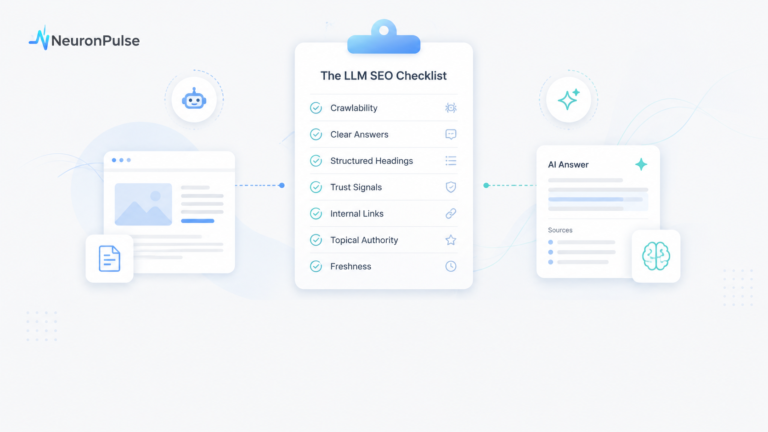
AEO + SEO Checklist
Before publishing a page, check both sides.
SEO checklist
- Is the target topic clear?
- Does the page satisfy search intent?
- Is the title specific and compelling?
- Is the page crawlable and indexable?
- Are headings properly structured?
- Are internal links included?
- Is the content comprehensive enough?
- Does the page load well on mobile?
- Are images optimized?
- Are there trust signals?
AEO checklist
- Does the page answer the main question early?
- Are there concise answer blocks?
- Are real user questions used as headings?
- Is there a useful FAQ section?
- Are tables or lists used where helpful?
- Are definitions simple and direct?
- Can the content be summarized easily?
- Does the page include examples?
- Is the content specific enough to be cited?
- Does it avoid vague filler?
Common Mistakes With AEO and SEO
Mistake 1: Thinking AEO is just adding FAQs
FAQs help, but AEO is bigger than that. It is about clarity, structure, intent, and answer quality throughout the entire page.
Mistake 2: Writing for algorithms before people
Content that sounds robotic is a problem. If the page is not useful to a real person, it is not truly optimized.
Mistake 3: Burying the answer
Many articles spend 300 words warming up before answering the question. That is bad for readers and answer engines.
Mistake 4: Ignoring SEO fundamentals
AEO cannot save a page that search engines cannot crawl, understand, or trust.
Mistake 5: Copying the same structure for every article
This is important. Not every article should sound the same. Definitions, comparisons, tutorials, reviews, and workflows each need a different rhythm.
For example, this article is a comparison. It should feel different from a “how-to” article or a platform optimization guide.
Final Takeaway
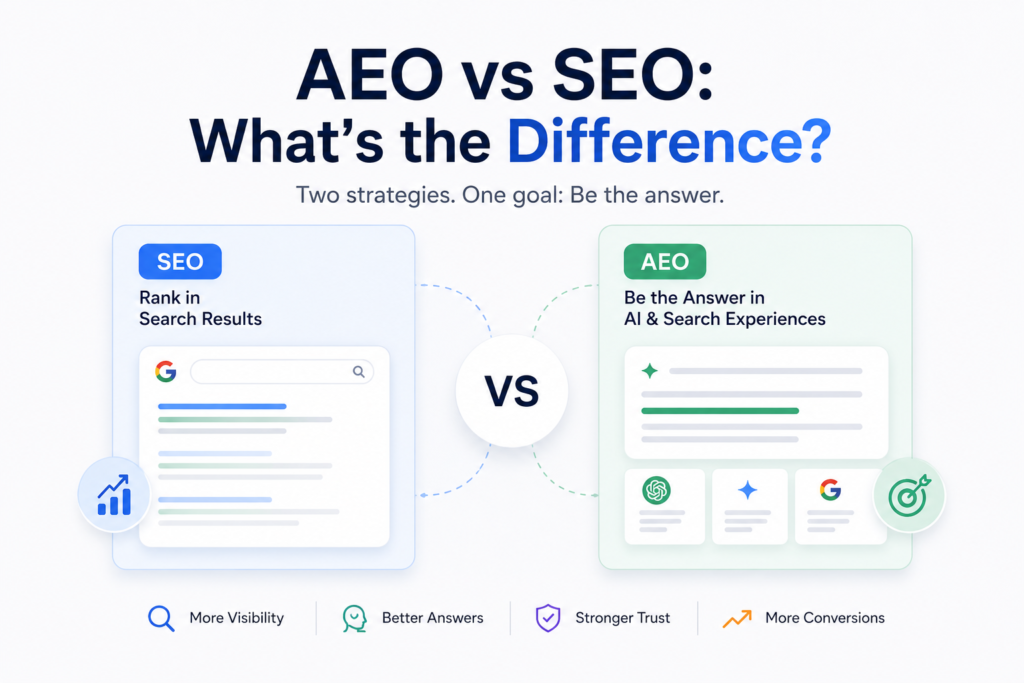
AEO and SEO are not competing strategies.
SEO helps your pages earn visibility in search. AEO helps your content become useful as a direct answer.
In the past, many marketers focused mainly on rankings and clicks. Today, search visibility also includes snippets, summaries, voice responses, AI Overviews, ChatGPT Search, Perplexity citations, and other answer-driven experiences.
The best strategy is to create content that ranks well, answers clearly, and earns trust. So, in essence, just make good content that users will want to engage with, and also make sure it is correctly structured.
That t means every article should do three things:
- Help people understand the topic quickly
- Give search engines a well-structured page
- Give AI systems clear, credible information worth summarizing or citing
That is where SEO and AEO meet, and where content creators will need to focus their energy on if they want articles to be ranked and cited in Google search and AI search mediums.
FAQ About AEO vs SEO
SEO focuses on improving a page’s visibility in search results. AEO focuses on structuring content so it can be used as a direct answer in snippets, voice search, AI summaries, and answer engines.
No. AEO is not replacing SEO. It expands SEO by adding an answer-focused layer. Websites still need technical SEO, content quality, authority, internal links, and crawlability.
No. AEO applies to AI search, but it also applies to featured snippets, People Also Ask, voice search, and traditional answer boxes.
Yes, AEO principles can help make content clearer and more useful for AI-generated search summaries. However, no strategy can guarantee inclusion in Google AI Overviews.
Yes. Clear, structured, source-worthy content is better prepared for AI tools that summarize, cite, or recommend web sources.
Yes, but they are not enough. AEO also depends on questions, entities, structure, clarity, and usefulness.
Not every article needs a long FAQ section, but most informational articles benefit from answering related questions clearly. The FAQ should be useful, not filler.
Start by identifying the main question your page should answer. Then add a clear answer near the top before expanding with examples, details, and supporting information.